Showing posts with label ethnobotany. Show all posts

Monday, January 31, 2011

Pomegranate (Punica granatum)


pomegranate is certainly one of my favorites fruits. its deep red color and juicy gems within are so refreshing and healthy. this ancient plant is native to iran and northern india and is widely cultivated in the mediterranean, india and tropical africa. if you've ever wondered how many seeds a pomegranate has within - guess no more, the average among varieties is 613!

pomegranate skins are a great by-product dye. we collected ours from a local juice shop, by just asking for their left over peels. i set the fresh skins out in the sun to dry for a day, then we boiled them up with water, submerged our mordanted fabric and voila! a gorgeous reddish brown!

Monday, January 17, 2011

Tulsi: Holy Basil

Our plant behind the house in Chidambaram

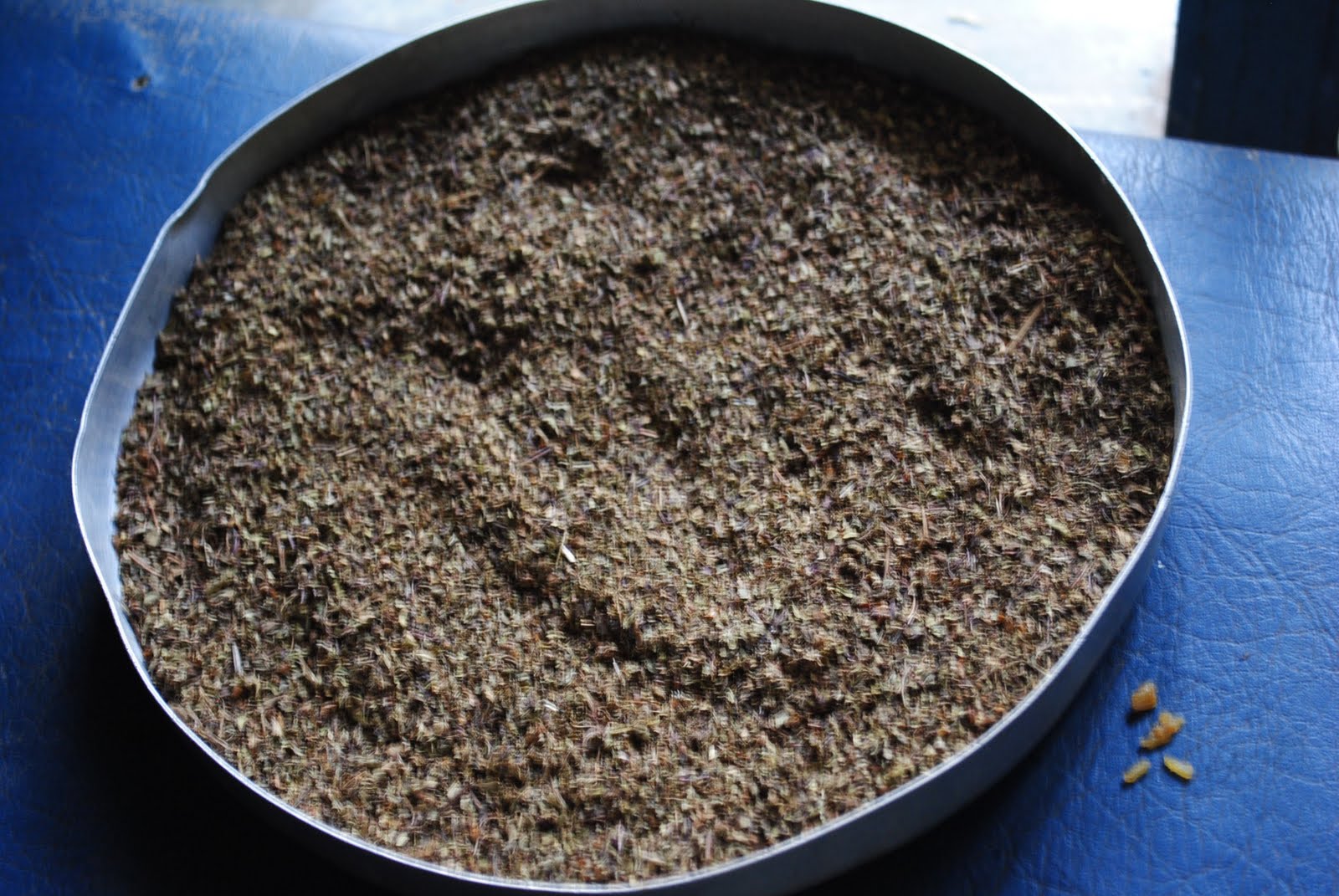
Dried Leaves for Tea


Many have heard of this wonder plant, sacred and useful, Tulsi: Ocimum sanctum (Syn. O. t

enuiflorum).

There are many varieties of Tulsi - a variety of basil, whose Genus itself has 40 odd varieties. The most common cultivars are Krishna, Vana and Rama and some say that it has been used for over 5000 years in India.


This plant is easy to grow in a warm climate. It is a perennial that reseeds itself in hot climates and can be grown as a summer annual in more temperate areas such as the Bay Area.


The plant, which some say to be a reincarnation of Krishna is adored and adorns many Indian households, most giving the plant a special alter style pot and offering flowers and other such puja items to the plant as they would other religious icons.


Tulsi is used as a immune booster, to fight off coughs and colds, for relaxation and stress-relief and as a digestive-aid.


You can eat a few fresh leaves a day, or add them to your water for fragrance. Or, most commonly, you can dry the leaves and prepare a tea. You can also infuse the leaves into honey to use.

Saturday, January 15, 2011

sugar cane - nature's candy

Saccharam sp. -- the plant we know and love for helping add a little sweetness to our lives. There are some 35 species of sugarcane, members of the grass family Poaceae. Sugar has an extremely long and not all that pleasant history, to read more on this topic I highly recommend Sidney Mintz's book " Sweetness and Power"

Here in Chidambaram, where sugarcane is cultuivated in all the surrounding fields along with paddy, the purple sugarcane is honored during the festivities of Pongal. After using them for the festivities, we get to cut open the stalks and chew on the yummy pith - savoring the sweet water within. Lining the streets here you will see vendors selling fresh sugar cane juice - I had once believed that they added water to the sugary nector, but no! The stalk contains so much water. We first split the cane, then skinned off the outer purple layer and cut the stalk in to small bits - just like candy. You chew the bits to release the yummy sweet liquid then spit out the fibrous remains. so sweet and tasty!

Friday, January 14, 2011

Pongal: A harvest Festival


Happy pongal from Chidambaram. Pongal is a harvest festival celebrating the abundance of crops and giving thanks to the sun god and cows for food and milk. Preparations for Pongal have been in full swing. Yesterday we headed to the market to get beautiful fresh purple sugar cane stalks to decorate our home with and eat after the festivities, fresh ginger and turmeric with their stems and leaves to use to prepare the pongal with. Pongal literally means to boil over, and in the morning on Pongal day, a dish called "chakara pongal" - a sweetened rice pudding is prepared, as the milk boils over the pot adorned with the turmeric and ginger leaves, we chant " pongal - o - pongal" boil boil!

special kolams are made to decorate the outside of the house.

a simple recipe for my version of chakara pongal:

Ingredients:
handful of cashews
1 tsp. freshly ground cardamom powder
1 tbsp. jaggery
1/2 cup rice
2 cups milk
ghee

1. heat the ghee in a pot and add the cashews, once browned add the rice and saute a bit until ric is clear
2. add the jaggery, milk and cardamom
3. stir constantly to avoid the bottom from burning
4. chant pongal - o-pongal!
5. enjoy

Monday, August 2, 2010

Elderberry

Ok, so I know I just said that Amaranth was my favorite plant, but now it's Elderberry. With medicinal, edible, and dye properties it is a winner!

here are some images from a recent dye experiment. this was with the leftover berries from my sister's Elderberry Cordial.

I put about 2 cups of elderberry mush with water and brought to a boil. I then added a few pieces of handwoven nettle fabric and some silk-wool scraps. I boiled for 1 hour solid. Then, I turned off the heat, covered and let sit over night. In the morning I removed my fabric, rinsed and enjoyed the gorgeous wine-color!!

The slight difference between the elderberry dyed nettle (left) and natural (right)
I loved this two tone effect on the wool silk!


Saturday, July 31, 2010

J'adore Amaranth

A Rose and an Amaranth blossomed side by side in a garden,
and the Amaranth said to her neighbour,
"How I envy you your beauty and your sweet scent!
No wonder you are such a universal favourite."
But the Rose replied with a shade of sadness in her voice,
"Ah, my dear friend, I bloom but for a time:
my petals soon wither and fall, and then I die.
But your flowers never fade, even if they are cut;
for they are everlasting." ---- From Aesop's Fables


I think amaranth is one of my favorite plants. In permaculture we talk alot about stacking functions and the amaranth is truly a multi-functional plant indeed. You can use the flowers to make a gorgeous dye. You can grind up the seeds make plant based paints. You can eat the highly nutritious grains. You can eat the highly nutritious leaves. The plant is so gorgeous it makes your eyes hurt. It can be a cut flower. Time go to plant some amaranth in my garden.

Tuesday, July 13, 2010

Lawsonia inermis

all of these beautiful images by paige green photography. thank you paige!!


henna or mehendi or maradhani is the dye from the plant Lawsonia inermis. The plant is native to Northern Africa, Southern Asia and parts of Australasia. We used to have a tree in my grandparents house in Chennai. The leaves are dried and powdered then mixed with water and sometimes eucalyptus oil to form a paste. The paste is then applied to the skin. When dry a mixture of sugar and lemon is applied to avoid the henna from chipping off. You can keep henna on any where from 30 minutes to overnight. For the wedding I kept mine on over night. It was the darkest 36 hours after application. It is such a beautiful art with rich designs from many cultures. The plant can also be used to dye clothing.

Friday, October 16, 2009

treasures from the spanish table


i recently went over to the spanish table in berkeley and was amazed by what treasures they have. it is brightly colored with everything from cookbooks to saffron, white wine to paella pans, this is definitely a goto place for the rare and special items you might need in your pantry.

i bought some TAZA organic guajillo chili chocolate-- perfect for baking, hot chocolate or for cooking. it comes in this pretty disc and is stoneground in small batches somerville, mass so i couldn't resist.


my second treasure was some marcona almonds in rosemary honey.


Monday, December 15, 2008

tiny treat


fresh pomegranate juice and a small persimmon.