Monday, January 23, 2012

many moons


G and i so love our new many moons calendar. it is beautifully designed by jeremy at rendij studio
one resolution for 2012 is getting to know the moon more, and knowing the cycles.  yesterday was a new moon and the transition into aquarious. 

Thursday, January 19, 2012

Kaapi Coffee Sangati


In December, G and I started our  Sangati coffee sessions: Brass/Vinyl. Each week we set up shop at the Subterranean Art House in Berkeley and host a charming little event that brings people together in the morning for South Indian coffee and Indian classical records.  We use coffee beans from Bicycle Roasters in SF, Straus organic milk and sugar grown and processed in the USA. Coffee is one of those things I cannot live without and thankfully come from a heritage where coffee is king. The streets of Tamil Nadu are lined with coffee vendors serving hot hot coffee and people stopping just to get a quick dose. As soon as you enter a house hold you'll be asked if you'd drink some coffee kaapi kuidikerail aa?  If you say no, you'll surely be convinced to at least have half a cup just ara cup.  I love the sort of cult phenomenon around it. And I admit that I LOL-ed while watching this. 

Anyway! The point is that G and I wanted to create some of the special coffee moments we've experienced in India and in our Berkeley cottage with our friends. It's a simple part of many of our daily rituals that is beautiful to share together. The collection of Indian classical Records is a reason to come too..


stainless steel pots for pouring of coffee and milk.


Pouring the hot water through the coffee filter. 
Modern Japanese coffee culture meets Traditional Indian.


Just one of the amazing records (and record covers!)


Voila! The finished drink. Served in stainless steel tumblers and davara (the saucer type cup used to pour the coffee back and forth for cooling and frothing). 


the meter pour - G froths some milk. 


hope to see you there! 

Monday, January 16, 2012

happy new year in plants

so i know that each new year i resolve to write more blog posts, but i really think that this year is going to be the one! so far, 2012 has been great full of great projects and good times with close friends and family. i took a walk through the botanical garden last week and got some fresh inspiration for design & garden. the garden is always abundant with color, texture, good smells and astonishing plants. please enjoy the pics and i hope to connect with more of you in the new year. 


stunning spines in the arid house


 120 degree angles: nature's beautiful example of efficiency


the view of the bay from the top of the mediterranean area through shirley watts' installation 


flowering grasses


blooming fuschias in the meso american collection 


cocoa pods in the tropical house. fruits taste like jolly ranchers
 (i tasted them in trinidad  not in the botanical garden! ) 


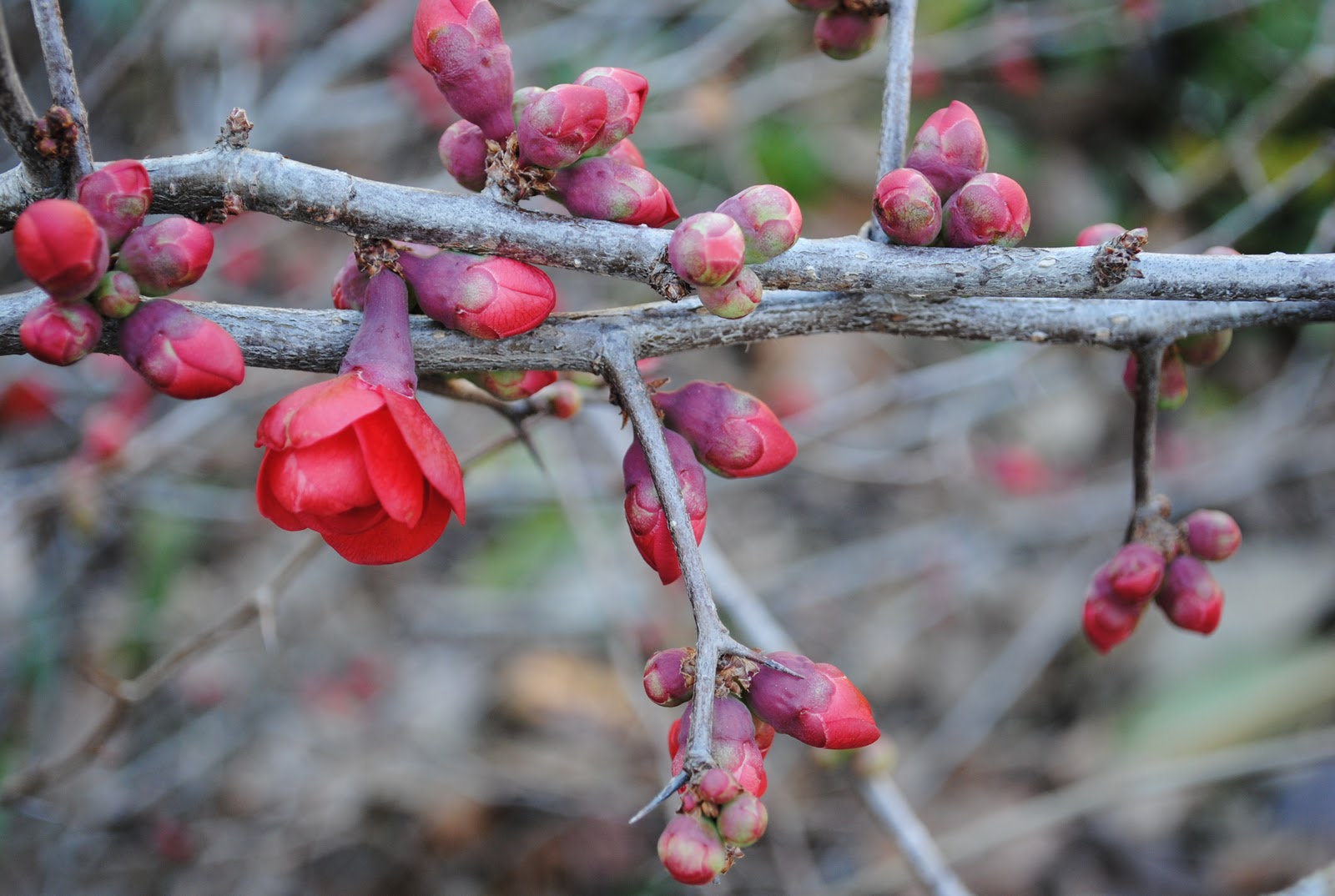
flowering quince from the chinese traditional medicinal garden


banksia from the australasia collection  


rhododendron arboretum in full bloom 

Thursday, December 8, 2011

transforming front yards

Two weeks ago my friend and design partner Laura and I got our first job installing a garden in an Oakland home. Our job was to clear out and plant three beds in our clients' front yard. They wanted a mix of natives, grasses, flowers and primarily easy to care for colorful plants. They also wanted a flowering vine to trellis up their entrance way. Here are a few photos of the design before and after planting. 


The main bed, with lots of "weeds" coming up, a bare fence and existing tree. 


After a good weeding we laid out our plants and stones. Our designed was centered around a repeating theme of grasses and succulents. The bed is lined with California poppies. An evergreen Clematis vine is what we chose for the entrance.


Here's a close up of our planting groups. We got the stones from American Soil and Stone. The colorful grasses are Phormium 'jester.' In the background along the fence you'll see a CA native grape that we chose to line the wall. 


One focal counterpoint to the existing tree is the addition of a beautiful dwarf Japanese maple 'pixie.' Japanese blood grass provides colorful foliage to the left. 


The view from their porch. We mulched the bed nicely to keep out weeds and pull the design together


The far planting bed along the house, overflowing with weeds and with a well established jasmine and camelia plant. 


We cleared the bermuda grass, and piled in ground covers, and CA native sticky monkey flowers and poppies. 

Designing and installing the garden was great fun. If you know of anyone who needs a little nudge to transform an empty garden space into a thriving native, colorful or edible garden, please get in touch.

Thursday, December 1, 2011

Food Rules!

This semester I've been attending the Chez Panisse Foundation/UC Berkeley class called Edible Education 101, co-taught by Michael Pollan and Nikki Henderson.  We had some great speakers including the inspiring Peter Sellars:


With the weather changing and book season in full swing, I've decided to spend a few posts reviewing some of the recent botanical books I've been reading.  Books make great holiday gifts, and there's nothing like spending time in your favorite local bookstore, especially one like  Diesel Bookstore who recently had a fun customer appreciation pie & wine party with every book 20% off.  They also gave away these pins as party favors:


I decided to pick up a copy of Michael Pollan's "Food Rules" with beautiful illustrations by Maira Kalman.  The book outlines some basic food rules we ll should abide by, with the pivotal one being:
" When You Eat Real Food, You Don't Need Rules"


My most favorite rule is certainly:

"Place a Bouquet of Flowers on the Table and Everything Will Taste Twice as Good"  


I admit, I felt a little dorky asking MP to sign my copy at our last class, but I'm glad I did.


Wednesday, November 30, 2011

Wicked Plants


I've finally gotten around to reading "Wicked Plants" by Amy Stewart; and what a terrific book! The book describes notorious members of the plant world known to allure and kill, poison and possess their victims. It's like a horror story for botanists. And believe me it is creepy! Not only are the usual suspects listed - wormwood, mandrake, deadly nightshade, but also some familiar names on the dinner table: corn, kidney, beans and elderberries all have a dark side.


A few fascinating factoids to share (but for the full story you'll have to read the book!): 
  • Coca-cola may still be flavored with the benign agents of coca (Erythrosylum coca) and kola nut (Cola spp.).
  • Betel leafs (Piper betle) come from a totally unrelated plant from the Betel nut (Areca catechu).
  • Poinsettias (Euphorbia pulcherrima) are not as poisonous as they are made out to be. 
  • The mandrake (Mandragora officinarum) is another member of the infamous nightshade family.
  • Poison hemlock (Conium maulatum) killed Socrates and Plato witnessed his death.
  • In 1961, An unexpected bloom of (I know its not a plant) Blue-green Algae (Cyanobacteria) poisoned anchovies that seagulls in Santa Cruz ate and caused their strange and alarming behaviour. This caught the attention of Hitchcock and gave him the final push to make his film based on the Daphne du Maurier story "The Birds."
It would make a wonderful holiday present for that special someone!  Enjoy.


Tuesday, October 25, 2011

south indian cookery class

Last weekend I had the good fortune to lead a group of wonderful people in cooking a classic South Indian meal. I have been wanting to do this since returning from our stay in Chidambaram, where i would cook each day in a very traditional fashion - Sambar, Rasam, curry for brunch, Idly/Dosa for Tiffin, Homemade yogurt and rice for dinner. 

We had about 11 folks in the inaugural class, and I think it went well!! I wanted to be ambitious, so the core part of the class was preparing our own homemade Sambar powder. This became quite time consuming to grind all the spices that we bought for each participant to take home a small batch, so in the end we ground enough to use for the class and sent every one home with whole spices in the right proportions for their sambar podi. 

We made sambar, rasam, beetroot curry, carrot salad, and yogurt rice. 


Spices required for South Indian cookery: fresh coconut, channa dal, mustard seeds, dried red chilis, black peppercorns, fresh curry leaves, cumin, fenugreek, urad dal, green chilis. (asoefetida not pictured)


The "Anjala Potti" every householder's box of offerings to the kitchen. Mine has urad dal (black gram), methi (fenugreek), (kadugu) black mustard seeds, dhania (coriander seeds), jeera (cumin seeds), somph (fennel seeds), and a little tamarind.


We started out by making our own sambar powder! The key ingredient for good sambar and rasam.  Turned out great, but smaller batches are much easier to handle. I would recommend using a smaller spice grinder,  rather than food processor. 


We made kabocha squash sambar with coconut and tomato rasam with fresh black pepper and cumin. You can tell that the sambar is thicker and more stew like, while the rasam is thinner and more broth like. 


Spluttering mustard seeds, the key final ingredient to most South Indian dishes. We made a big batch and added them to the Sambar, the Rasam, the Thayir Sadam, and the carrot salad. Every dish has mustard seeds!! 


Our final feast, complete with a few celebratory harvest ales that went nicely with the kabocha sambar! Thank you to our hosts and to all who participated. And to Gautam for taking the photos! 

Wednesday, September 28, 2011

Re-Skilling with Natural Dyes

Last weekend I went on a road trip to Santa Cruz for the Permacouture Institute. We were asked to present at the Re-Skilling Expo, a day long event dedicated to education around all sorts of "lost" arts (think- beekeeping, making home remedies, fermenting, dehydration, natural building, etc...)
It was a great event and so fun to teach natural dyes with Sierra Reading, a textile student at CCA. 


Just a sampling of our brilliant show & tell: onion skins and avocado pits ready for the dye pot, red sandal wood dye & a homemade iron bath. Sierra's beautiful samples of onion skin, safflower and olive dyes.


Sierra showing off our colorful table display. Turmeric dyed prayer flags, Sierra's masterpiece of natural dye screenprinting using purple cabbage. And our dye vats for the afternoon workshop beginning to simmer...


nasturtium presses, black bean dye, and samples from colors made in India earlier this year.


Apple Leaves and Eucalyptus leaves, both harvested from the Permaculture Garden at Merritt College (Was able to take the leaves after a pruning demo)


We had to modify the schedule to give ourselves a 15 minute breather in between sessions!


The spectacular color of Fall's eucalyptus.


                                                                   Hanging up our colors.


          I loved the passers- by who peeked through the window to amaze at these colors from nature!


                                                      Fig leaves offering a golden yellow


It was a wonderful day in Santa Cruz. Had to make a visit  to the beach while we were there for a quick hello! 

Monday, September 26, 2011

Slow Food Sangati


On Saturday, September 17 The Sangati Center participated in the $5 Slow Food Challenge - A national event encouraging folks to prepare a healthy, local and organic meal to prove that good food does not have to be expensive.

All of our ingredients came from the Berkeley Farmer's Market. We served 50 dinners at a $5 donation/plate

Our all organic menu:

Market Salad - Happy Boy Farms greens - wild arugula, baby spinach, little gems, and salad mix, Purple Cherokee heirloom tomatoes, Kashiwase Orchards 'September Sno' peaches, Frog Hollow Farm cold press extra virgin olive oil, home grown meyer lemon, Tercera Farms shallots.

Main - Massa Organics California brown rice, freshly shelled Tercera Farms heirloom cranberry beans, oyster and shitake with garlic, Full belly farm walnuts

Sweet- Rose Geranium scented strawberries from Lucero farms with black mission figs.

After the meal, of course, there was a beautiful concert presented by the Sangati Center and performed by Mohanrangan Govindraj on the bamboo flute. We had over 75 guests at the concert.

What a perfect evening.

Thanks to the Subterranean Art House in Berkeley for hosting our event and my loyal friends and event volunteers - Josh & Jaia, Zarah and Christine.


Saturday, September 3, 2011

every now and then opportunity arises.


As one of our wedding gifts we were given a juicer, an amazing juicer! This thing has become G's soulmate. When we packed all of our things into storage and headed off to India, he made sure that the juicer was clearly labelled and easily accessible so that whenever we came back it would be front and center in our kitchen. And it is. In our tiny kitchen with just two counters, the juicer has one all to itself. But I cannot complain. Having fresh juice daily is truly invigorating and nourishing! Carrot, Apple, Ginger is the house special, but every now and then we add celery and beets to the mix. The other day we made beet juice and when we went to clean out the juicer (by the way the fiber left over from the juicing process is wonderful in quick breads and muffins!) we found this perfectly carved beet just waiting to be stamped. The natural color of the beet transfered beautifully to my envelopes. Luckily I had just picked up a stack of lovely envelopes (10 for $.25) at my neighbor's garage sale. Beets are often mistaken for natural dye, when in fact, they are a stain. The color rests only on the top layer of fabrics and does not bind to the fiber as a whole, resulting in a color that fades to brown over time. But, the beet with its deep deep magenta hue makes a perfect candidate for stamping.